Wagon Data
The majority of railway undertakings run trains composed of wagons from their own wagon park. In such cases the railway undertaking holds the role of the owner, the keeper and the entity in charge of maintenance of the wagons. Wagon check of the obligatory (with asterisk) and optional (if required) parameters is run briefly since all parameters and wagon interoperability status are known.
Other wagons in a train are either from other railway undertakings or from the private vehicle owners. In such cases the wagon parameters check requires more effort, since not all parameters are at hand. For transporting a good on a wagon, the sources of wagon parameters include:
- Wagon data sheet or data from a wagon catalogue.
- Loading scheme (for open flat wagons).
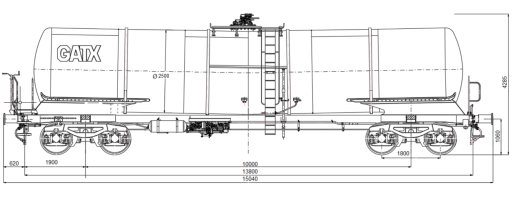
- Wagon sketch (if missing in wagon data sheet).
- Wagon photo with all markings of the wagon (alternative).
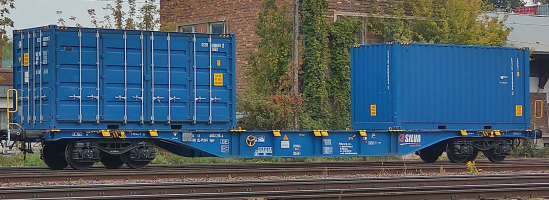

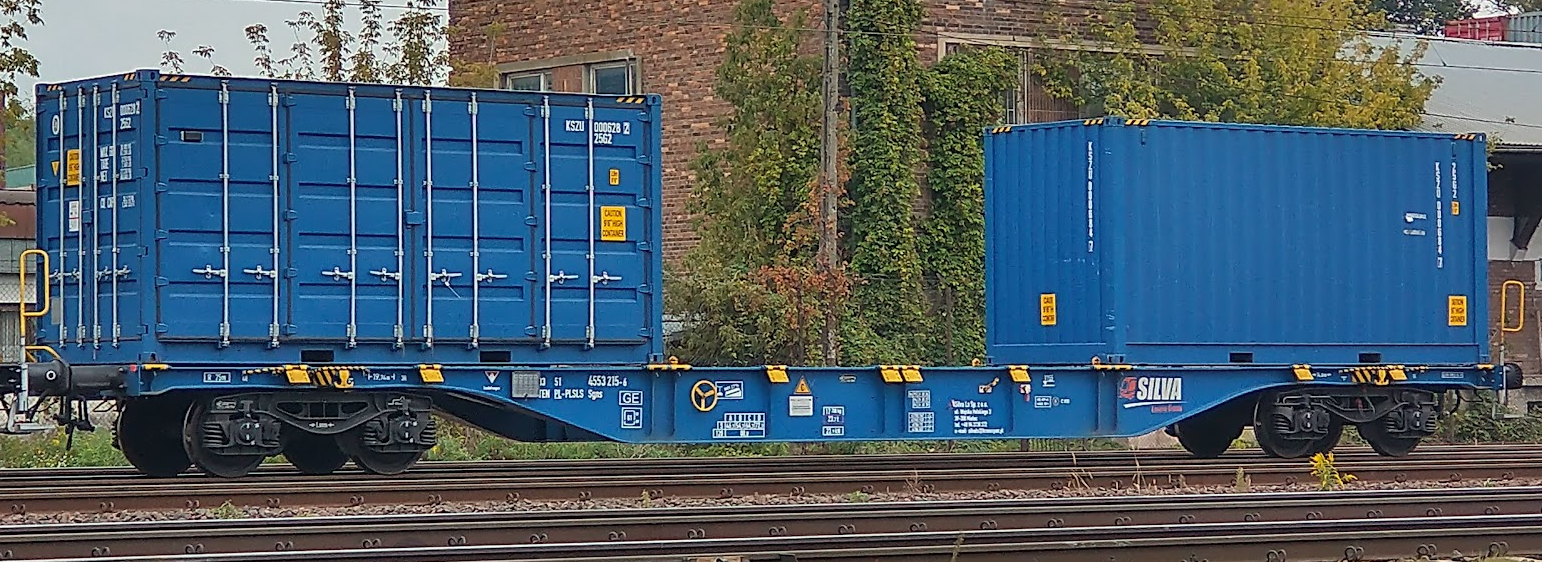
Wagons and Vehicles are to be declared as a type of good when they are subject to commercial contract, or are newly constructed and are in the tests phase. Some vehicles are exempted from the requirement of interoperability and in international transports they run on an exceptional transport basis (for example historical vehicles).
 Wagon or vehicle type
Declare wagon construction type, series, serial numbers, specify whether empty or loaded, and any other important traits as applicable. For vehicles state construction type, number of units (for vehicles with multiple units), respectively manufacturer's number or vehicle's EVN The unique number consists of 12-digits which identify technical characteristics of the railway vehicle. EVNs are managed in the European Vehicle Register (EVR).. Advise EVN status Reserved Status:
The status is assigned during the testing phase of a vehicle.The number is allocated but not yet officially assigned to the vehicle. The number may be already marked on the vehicle. The number remains in a reserved state until the vehicle is ready for market introduction.
Active Status:
When a vehicle is ready to be introduced to the market, the reserved EVN becomes active. It signifies that the vehicle is officially registered and operational.
Deleted Status:
The status indicates that the EVN is no longer valid. The reason for EVN deletion can be for any reason, for example the vehicle is no longer in service or if the registration needs to be revoked., whether reserved or already assigned. For wagon groups or multiple vehicles declare just the first six digits of the EVN number in code #1a, and consider adding a more detailed list in code #28 (in the case of a the few vehicles) or as an appendix with a separate list to the application, when several wagons are to be declared.
For example: newly built Tank wagon Zacns / GATX type 3500, EVN 37 84 **** ***-* (reserved).
The points below describe basic and crucial parameters of wagons and vehicles which are required for exceptional consignment permit application. These points are declared with simplified examples.
Type of wagon*
Describe the class of wagon and type number as specified in the standard marking.
For example: Laaps 1260, Zacns 292, Sggrs 80’.
International usability
Declare for international transportation, and for national transport of non-interoperable wagons.
For example: RIV or TEN GE.
Wheelbase / bogie pivot pin pitch* [mm]
Indicate the distance (a) between end axles of vehicles not fitted with bogies or between bogie centres.
For example: (a) 8600, (a) 10100, (a) 2x 10375.
Bogie wheelbase* [mm]
Add the distance (p) between the outermost axles for wagons on bogies.
For example: (p) -, (p) 1800.
Number of axles*
Declaration depends on the construction of a wagon. Describe in detail the axle layout of the wagon.
For example: 2, 4 (2x 2), 6 (3x 2), 8 (2x (2x 2)).
Length over buffers* [mm]
For articulated wagons (short coupled), additional annotation is accepted.
For example: 27000 (2x 13000), 15140, 26390 (2x 13195).
Floor height above Top of Rail* [mm]
The parameter applies only to open wagons transporting goods which while placed on the wagon may foul the loading gauge.
For example: 1260, -, 1150.
Tare weight of wagon* [t]
Tare weight value from the wagon data sheet indicates the maximum of the tare weight for the particular wagon class and type number. Tare weight value from a photo indicates the actual wagon tare weight.
For example: 26.6, 21.5 t ± 2%, +/-26.0.
Total weight* [t]
The sum of a good's mass plus its securing components and the wagon tare. Declare it with actual sum values or state the maximum weight in relation to the requested line load class. Observe the relationship between the total weight and the wagon speed.
For example: max. 79,6; 90,0; 120 or max. allowed for lines class C3 (with vmax. 120 km/h).
Load per meter* [t/m]
Declare the value indicated by the wagon manufacturer or calculate the actual value of load per meter by dividing the total of the wagon’s dead weight plus the cargo weight by the wagon’s length in meters. Alternatively state the maximum value of load per metre associated with the line class reference value. For wagons with load grid, it is sufficient to declare "normal" if allowed the total weight in code #8, is not exceeded for the line class.
For example: 3,0; 7,2 (max. C-class), normal D3.
Largest axle load* [t]
Enter the value indicated by wagon manufacturer or the calculated actual value of load per meter. Alternatively, you may declare the maximum value of load per meter associated with the line class reference values. For wagons with a load grid, it is sufficient to declare "normal" if the allowed total weight for the line class is not exceeded.
For example: 20.0, normal D3.
The example below references vehicles whose sizes conform with the preferred route. For wagons and vehicles which do not conform with the preferred route gauge, explore the chapter on Out-of-Gauge Load.
Comments on critical points
Declare the vehicle gauge profile with which the wagon conforms. Where applicable, declare the upper and lower reference profile conformity. Determine compliance with the kinematic or static gauge profile by reference to UIC leaflet 505-1 or EN 15273-2 as appropriate.
For example: Wagon conforms with G1/GI1 reference profile, the wagon contour does not exceed the reference profile of the G2 kinematic gauge according to the EN standard.
Application declarations for code #28 greatly vary in the details included because they depend on the type of railway vehicle being transported. Therefore, this code contains summary descriptions which is sufficient to declare parameters of a wagon with the goods.
Miscellaneous - remarks on railway wagons and vehicles
In miscellaneous remarks, declare breaks status (active / inactive), coupling and buffer status (when non-standard), wheel diameter dimension and type of suspension if these differ from the GCU and TSI regulations, minimum allowed curve radius of the wagon, and other technical details of the vehicle, and operating conditions which may affect carriage conditions.
For example: Vehicle accompanied by manufacturer's employee, brakes switched on, smallest radius of curvature Rmin 150 m, wheel diameter ø 850 mm.